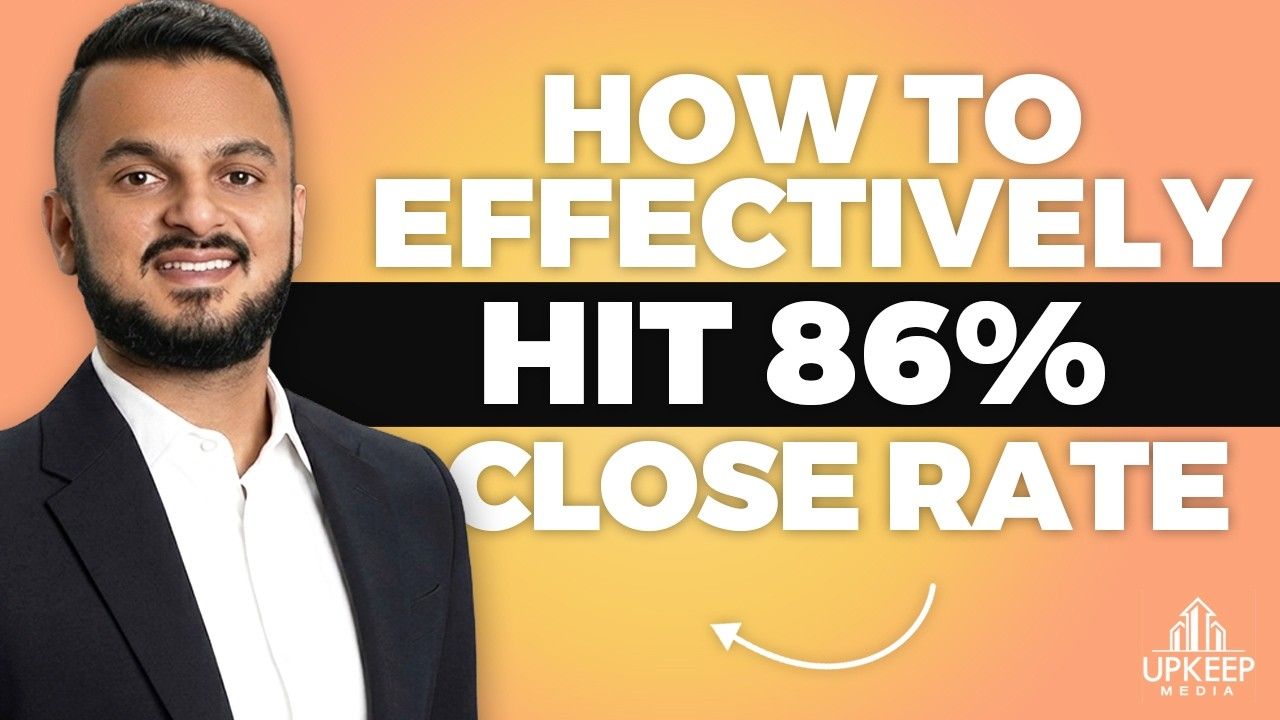

Speed to Lead for Property Managers: The Process Behind an 86% Close Rate
Upkeep MediaSpeed to lead in property management means answering an owner inquiry fast enough that yours is the first useful conversation they have. Dhruv Kohli, co-founder of Good Neighbor Property Management based out of Austin, Texas, says his team closes 86% of qualified leads by replying to web forms within 60 minutes, booking consults no more than four days out, and following up three times over seven days.
Key takeaways
- Good Neighbor Property Management answers website forms within 60 minutes during business hours, and a person answers its phone line 10 hours a day, seven days a week.
- Capping the owner consultation calendar at four days out, as Good Neighbor Property Management does, gives an owner less time to hear about a competitor from a coworker or family friend before the call.
- Landlords who came to Good Neighbor from other companies described feeling bait and switched by salespeople who vanished after signing, so the person involved in operations runs every consult.
- When Good Neighbor launched, property management companies in Austin averaged a 2.8 Google rating, and the bad reviews were almost all about missed callbacks and broken promises.
- Good Neighbor follows every owner consult with an email within 15 minutes, a text, and three more follow-ups over the next seven days.
The numbers
- 86%: Good Neighbor Property Management's close rate on qualified owner leads, as Dhruv reported it.
- less than 60 minutes: How fast Good Neighbor replies to a website form submitted during business hours.
- 4 days out: The furthest ahead Dhruv's consultation calendar lets an owner book.
- within 15 minutes: When Good Neighbor's follow-up email goes out after an owner consultation.
- three follow-ups over the next seven days: Good Neighbor's follow-up sequence for owners who don't sign on the consult.
- nine doors: What Good Neighbor managed when it started in late 2022 or early 2023.
- over 340: Doors Good Neighbor manages today, per the episode introduction.
- over 200 Google reviews: The size of Good Neighbor's five-star Google review profile.
- 2.8: The average Google rating of Austin property management companies when Good Neighbor launched, from Dhruv's own market research.
- between 8 to 10 landlords a month: Owners Good Neighbor onboards each month who are leaving other property management companies.
Watch the full video
What we cover in the video
- 0:00 Why property managers get stuck at 100 doors. Why leaning on sphere keeps property management companies from building systems, and an introduction to Good Neighbor's growth from nine doors to over 340 with an 86% close rate on qualified leads.
- 1:14 Drew's path from junior agent to property management founder. Dhruv's path from junior agent to realtor to director of operations, and the poor experiences with other managers on his own rental that led him to start Good Neighbor.
- 3:34 Built by landlords for landlords. How having been a landlord shapes Good Neighbor's service, starting from the communication and transparency gaps he hit as an owner.
- 5:24 Sponsor break. A short break about the free property management lead generation session Upkeep Media offers podcast listeners.
- 6:08 Owner communication touch points and death by a thousand cuts. Why owners switching from other managers cite communication first, and the small touch points from intake to first disbursement that they notice.
- 8:54 Building a triage phone line instead of a receptionist. How Good Neighbor's triage line, modeled on a hospital line, logs each call, commits to a callback and books the property manager the same day.
- 11:03 Growing from nine doors without relying on sphere. Why sphere stalls most companies near 100 doors, and the Starbucks planning session where the founders asked what would still work at 200.
- 13:30 The three-pronged growth approach: agents, marketing, referrals. The three growth channels: a back-to-you guarantee for agents, a marketing firm that sharpened the website, and referrals from good service.
- 18:19 Handling angry clients and complaints. Why Dhruv answers angry emails with a phone call, and the breathing reset he uses before every call.
- 21:48 Team structure and the pod model. How the 12-person team is built around property managers supported by a listing specialist, a maintenance coordinator, an onboarding specialist and an accounting team.
- 23:20 The founder's role at 350 doors. How Dhruv spends his time at 350 doors on growth, strategy and blind spots like insurance and code updates so he isn't the bottleneck.
- 24:59 How speed to lead drives an 86% close rate. The speed to lead process: a reply within 60 minutes, a calendar capped at four days, consults run by Dhruv, and three follow-ups over seven days.
- 29:57 Earning a five-star reputation in a 2.8-star market. How a 2.8 average rating among Austin property managers showed that bad reviews come from poor follow-through, and how Good Neighbor built a five-star profile.
- 32:36 When to ask for Google reviews. Why Good Neighbor asks for reviews at real win moments, like a signed lease or an HVAC fix within 24 hours, rather than after every interaction.
- 34:40 What Drew would do differently: agents and hiring sooner. What he'd change: spending far more time with agents, and hiring sooner because waiting too long hurts the client.
- 37:00 Founder dependency and closing. Why founder dependency helps a small company and holds back a scaling one, and where to reach Good Neighbor.
An owner with a rental in Austin, Texas gets one free hour on a Sunday and decides to finally choose a property manager. Dhruv described that owner on Upkeep Media's channel: they call six companies, and the only one they reach is Good Neighbor Property Management.
Five companies lost that owner without knowing it.
Good Neighbor closes 86% of the qualified owner leads that come through its pipeline. Dhruv and his co-founder started with nine doors in late 2022 or early 2023 and now manage over 340, with another 40 about to come on.
The process behind that close rate runs on four clocks: 60 minutes, four days, 15 minutes and seven days.
What Is Speed to Lead in Property Management?
Speed to lead in property management is the time between an owner reaching out and a useful reply from your company. At Good Neighbor Property Management in Austin, the standard is a reply within 60 minutes to any website form sent during business hours, and a person answers the phone seven days a week.
Dhruv put the stakes plainly: "If business knocks and you can't answer quick enough and be helpful enough, it's your game to lose."
He means it literally. A form that says the owner has a home in Georgetown, here's the pain point, here's what they need, comes from a qualified owner who has already done the hard part.
The 60 minute standard holds because the alert is hard to miss. Good Neighbor connects its website forms to Slack, so each new lead posts immediately as an action-required message saying who needs to do what.
The first reply is a text. It thanks the owner and offers times to talk over the next two days.
The phone line runs 10 hours a day, seven days a week, and Dhruv said that was true at 10 doors and is still true at 350. Callers reach a person who knows their name and property, never a phone menu.
Owners who strike out with five other companies and reach Good Neighbor on the sixth call, he said, read the fast answer as proof of how the company will treat their property.
What Does a Property Management Sales Process Look Like From Form to Signature?
Good Neighbor Property Management's sales process runs on fixed times from the first form to the follow-up: a text reply within 60 minutes, a consult booked no more than four days out, an email within 15 minutes of the consult, then three follow-ups over the next seven days for owners who don't sign on the call.
Here is the sequence as Dhruv laid it out:
- Route every website form into a channel your team already watches. Good Neighbor posts each one to Slack as an action-required alert.
- Reply by text within 60 minutes during business hours, thank the owner, and offer times to talk within the next two days.
- Send a scheduling link instead of trading times by message. Dhruv used to offer "today at 2 or tomorrow at 4" and found a Calendly link worked better.
- Cap that Calendly at four days out, and open early mornings and evenings so working owners can book.
- Run the consult with someone who will oversee the property. The call covers the service and the pricing, and the aim is a signature on the spot.
- Email a follow-up within 15 minutes of the consult ending.
- Text the owner the number they can call or text seven days a week, with a line like Good Neighbor's: "Please don't assume, just ask if you have questions."
- Follow up three more times over the next seven days.
No step is left open-ended.
How Far Out Should You Book Owner Consultations?
Owner consultations should be booked within a few days of the inquiry. Good Neighbor Property Management caps its booking calendar at four days out, because a consult set two and a half weeks away gives the owner time to hear about another property manager from a coworker or a family friend before the call happens.
Dhruv has seen operators leave a Calendly open three weeks out. He described the cost from the owner's side: "If I book a consultation with you two and a half weeks out, I have such a high chance of running into a coworker that has a property manager."
The cap only works if there's always room inside it. He keeps evenings open, and early mornings when owners are on their way to work.
His reasoning is short. If an owner talks to him, he believes he can solve their problem, so the whole job before the consult is getting that conversation to happen inside four days, while the owner still wants it.
Who Should Run Sales Consults at a Property Management Company?
Sales consults at a property management company tend to land better when someone involved in operations runs them. Dhruv takes Good Neighbor's consults himself, so the owner talks to a person who will keep eyes on the property after signing, which avoids the bait-and-switch feeling owners describe when a salesperson disappears.
That complaint comes up with landlords who move to Good Neighbor from other companies. They "felt bait and switched," Dhruv said, after talking to a sales guy who knew nothing about operations and was never involved again.
There's a tension here, and he named it. At 350 doors, he said his calendar could fill with escalations within two hours if he let it, so he spends most of his time on growth, strategy and spotting blind spots, and works to stay out of the way on day-to-day decisions.
He still takes the consults.
If you run 150 to 500 doors and you're weighing a dedicated salesperson, test that bait-and-switch complaint against your own lost deals first.
Why Do Owners Switch Property Management Companies?
Owners switch property management companies over a pile of small communication failures far more often than over one bad event. Good Neighbor Property Management onboards 8 to 10 landlords a month who left other managers, and Dhruv said their top complaint matches the one he had as a landlord: slow, incomplete communication starting with the first intake form.
"It's never one situation that kind of pushes someone off the edge. It's death by a thousand cuts," he said.
Owners notice how quickly the intake form arrived, whether a human answered the phone, and whether the first disbursement came with an owner packet and a text confirming the money went out. The 60 minute clock keeps running after the signature.
The triage line
A triage line is a phone line where whoever answers pulls up the caller's record, writes down the issue and commits to a callback time, the way a hospital line works at 2 a.m. Dhruv compared it with the two setups he sees most often in the industry, and he doesn't like either.
| Receptionist model | No one answers | Triage line | |
|---|---|---|---|
| Who picks up | Someone who doesn't know the caller | Nobody, the caller is told to email | A person who sees the caller's record |
| Simple issue, like a portal login | Note taken, callback promised | Waits for an email reply | Fixed on the call |
| Harder issue, like a dispute | "Someone will call you back" | Waits for an email reply | Live transfer, or a same-day slot with the property manager |
Reviews follow the same rule
When Good Neighbor launched, Dhruv's market research put the average Google rating for property management companies in Austin at 2.8. He read the bad reviews. They rarely complained about the broken HVAC itself. They complained that nobody called back for almost two days.
"It's always a lack of follow through and a lack of communication," he said.
His fix is a commitment on every issue: log it, name a time, and report at that time even without a solution. A tenant told they'll hear back by noon gets a text at 11:59 if the repair isn't sorted yet.
Good Neighbor asks for reviews at real win moments, such as a signed lease or an HVAC problem fully resolved within 24 hours, its typical turnaround. The result is a five-star rating across more than 200 Google reviews, many unprompted, and those reviews sit right under the headline on its homepage. Our guide on how to get more Google reviews covers the asking side in more detail.
Where Do Qualified Owner Leads Come From Past 100 Doors?
Owner leads past 100 doors tend to come from several channels running at the same time, because sphere rarely scales. Good Neighbor Property Management grew on three: real estate agents who send owners its way, a marketing firm that sharpened its website and ads, and referrals from owners who had a good experience.
Sphere is the friends, family and past clients a new company draws its first doors from. Dhruv's first nine came from there, and he knew that "sphere is not scalable."
He cited another industry source putting the average property manager at somewhere between 80 and 103 doors. His explanation for the stall is that companies built on sphere never build systems, because everyone is a friend of a friend, the founder's personal phone keeps ringing, and the whole thing feels busy without serving many owners.
Agents
Dhruv says property managers need to stop competing with agents. Good Neighbor puts a back-to-you guarantee on its website and in every message to agents, promising the listing goes back to the agent when the owner decides to sell.
He also opens with something useful. After leasing a home three doors from an agent's listing with four applicants, he offers to send that agent the three who didn't get it.
Asked what he'd do with eight free hours, he said he'd spend them talking to agents.
The website
Dhruv hired a marketing firm early, and skeptically, and said it forced Good Neighbor to nail its fundamentals. The homepage leads with "built by landlords for landlords," then Google reviews, then the areas served. Our guide to property management websites covers what else that page needs.
Referrals
Rental owners tend to know other rental owners. Some of Good Neighbor's former tenants have since bought homes and become landlords themselves, and now refer as owners.
For a wider look at channels, see our guide to getting more property management leads. Agent, website and referral leads all land in the same Slack channel and get the same 60 minute reply.
Frequently Asked Questions
How fast should a property manager respond to an owner lead?
Good Neighbor Property Management replies to website forms in less than 60 minutes during business hours. The reply is a text with available times over the next two days. Dhruv's reasoning is that an owner who reaches out is a lead you can only lose by being slow or unhelpful.
What is a good close rate for property management leads?
The episode doesn't give an industry benchmark, but Good Neighbor reports closing 86% of qualified owner leads, which the episode's host called extremely high. The figure counts qualified leads only, so it isn't comparable to a rate calculated on every inquiry. Your own rate will depend on how you qualify leads and where they come from.
How many times should you follow up with a property management lead?
Good Neighbor follows each owner consult with an email within 15 minutes, a text with the number owners can call or text seven days a week, and then three more follow-ups over the next seven days. The sequence applies to owners who don't sign on the call.
Does a property management company need someone answering the phone seven days a week?
Good Neighbor runs its phone line 10 hours a day, seven days a week, and Dhruv said it did so at 10 doors and still does at 350. A person answers, not a phone menu. He credits that availability with winning owners who called several companies and reached only one.
Should a property management company hire a dedicated salesperson?
Dhruv runs Good Neighbor's consults himself because owners who left other companies described feeling bait and switched by salespeople who knew nothing about operations. If you hire for sales, the owner may expect that person to stay involved after signing. Weigh that against your own lost and churned owners before you decide.
Why do property management companies get stuck at 100 doors?
Dhruv's explanation is that companies stuck near 100 doors lean too heavily on sphere, meaning friends, family and past clients. Doors from sphere arrive without systems, so the founder stays busy without serving many owners. He cited another industry source putting the average property manager at between 80 and 103 doors.
When should a property manager ask for a Google review?
Dhruv asks at genuine win moments, such as a signed lease or an HVAC issue fully resolved within 24 hours. He avoids repeated requests after every interaction, which he said can sour a client even after a five-star experience. Good Neighbor's profile holds more than 200 Google reviews at a five-star rating.
How should a property manager handle an angry email from an owner?
Dhruv's rule is to pick up the phone instead of writing a longer email back. A reply-all email war, he said, turns into an ego fight where nobody is discussing the issue anymore. He opens the call by saying the easy move would be to point to the lease, and that he called to humanize the conversation.
When should a growing property management company hire its next employee?
Dhruv said he'd hire sooner if he started again. In his words, "You hire too early and your business hurts. You hire too late and your service hurts." Good Neighbor more often waited a little too long, and he covered the gap with nights and weekends he says weren't worth it.
Final Thoughts
An 86% close rate is Good Neighbor's number, on its qualified leads, in its Austin market. Your rate will depend on your market, your service and where your leads come from, so read it as one operator's reference point.
The clocks travel better than the rate. Every step in Dhruv's process has one: 60 minutes, four days, 15 minutes, seven days.
Pull two numbers this week: how long your last ten owner forms waited for a reply, and how far out your booking calendar runs today. If either is longer than Good Neighbor's 60 minutes and four days, start there.
If you'd like help finding where your owner leads come from and where they stall, get your free growth plan.
About Author
Upkeep Media is a digital marketing agency that specializes exclusively in marketing for property management companies. Since 2015, we have helped property managers generate more owner leads through SEO, YouTube marketing, website optimization, and online reputation management.
Newsletter
Get Weekly PM
Marketing Tips
Join 5,000+ property management professionals who get our weekly marketing insights delivered to their inbox.
Popular Posts
The Property Management Growth Playbook
Newsletter
Get Weekly PM
Marketing Tips
Join 5,000+ property management professionals who get our weekly marketing insights delivered to their inbox.
Popular Posts
The Property Management Growth Playbook
Blogs
Read More Blogs


Newsletter
Get Weekly PM
Marketing Tips
Join 5,000+ property management professionals who get our weekly marketing insights delivered to their inbox.
Newsletter
Never Miss a PM Marketing Insight
Join 5,000+ property management professionals who get our weekly marketing insights delivered to their inbox.